
Is a One Way Video Doorbell Better?
A one way video doorbell gives you visitor visibility without showing your face. See how it works, where it fits, and why simpler can be smarter.
By DoorVi Team
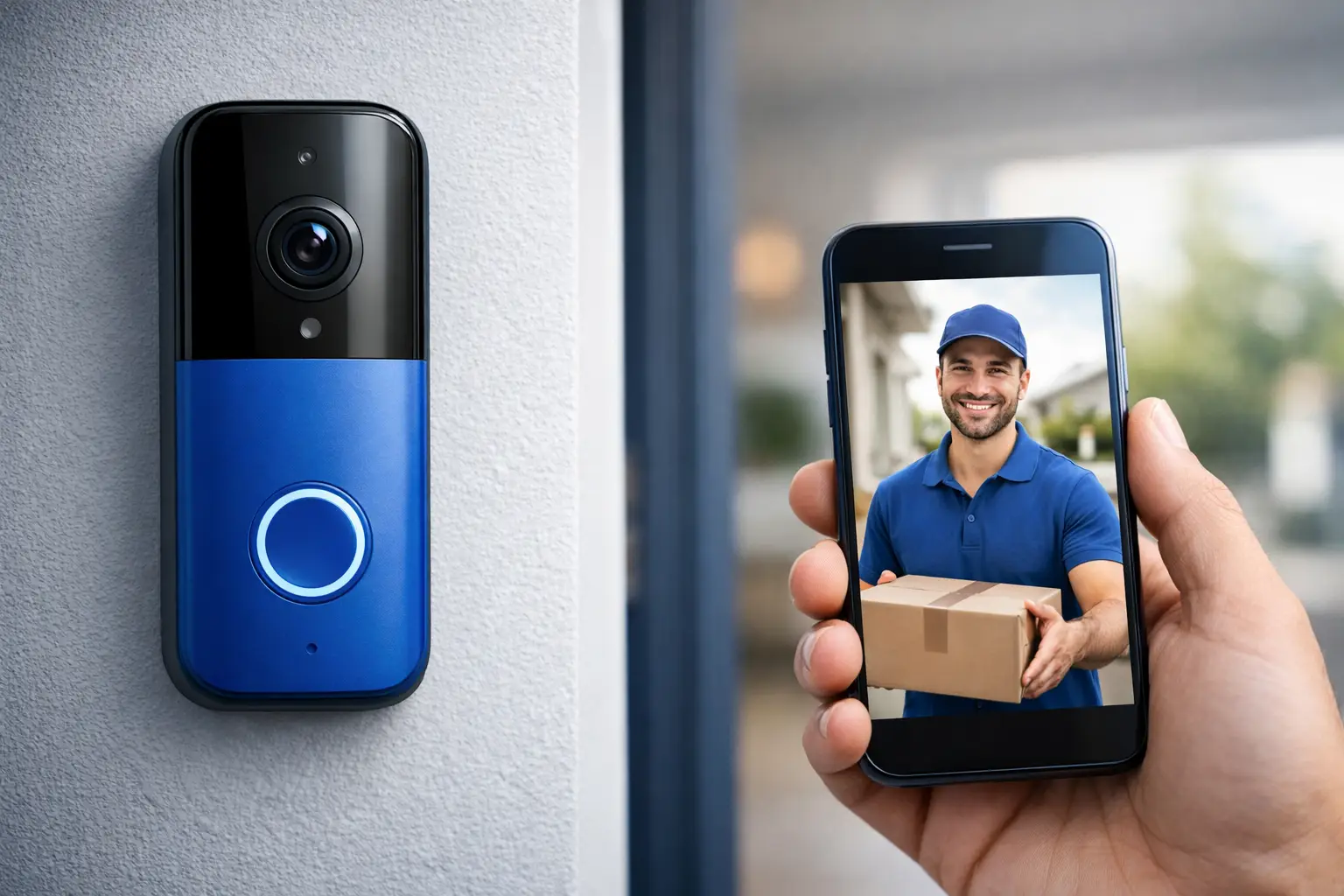
Someone rings while you're at work, on holiday, or simply upstairs with your hands full. You want to see who is there and decide whether to answer, but you may not want to appear on camera yourself. That is exactly where a one way video doorbell makes sense. It gives you a clear view of the visitor while keeping your side of the interaction private, which is often the better fit for homes, rental properties and small business entrances.
What a one way video doorbell actually does
A one way video doorbell lets the person inside see the visitor through video, while the visitor does not see a live video feed back. In most cases, the occupant can speak and listen in real time, but their own image stays hidden. That creates a different kind of front-door experience from the familiar two-way video doorbell model.
For many people, that difference is not minor. It changes the balance between convenience and privacy. You can verify who is at the door, handle deliveries, speak to tradespeople, or screen unexpected callers without feeling like you need to be camera-ready. For businesses, it gives reception-style control without requiring someone to sit at a desk all day.
The phrase sounds technical, but the appeal is simple. See first. Decide second. Respond on your terms.
Why the one-way model appeals to practical buyers
Traditional smart doorbells often promise more than people actually need. They add cameras, batteries, apps, wiring and subscriptions to solve what is often a basic problem: who is outside, and do I want to answer?
A one way video doorbell strips that back. It prioritises immediate visitor visibility and direct communication, without forcing a full smart home setup. That matters if you are fitting out a rented flat, managing a holiday let, running a small office, or looking after a side gate where wiring is awkward and maintenance is easy to forget.
Privacy is another reason this format lands well with practical buyers. Plenty of people want to see visitors but do not want to share their own image every time they answer. That is true for homeowners, but also for staff dealing with front-of-house enquiries, after-hours access, or ad hoc collections. One-way video gives control without overexposure.
Cost tends to improve as well. The more hardware a doorbell depends on, the more installation, charging, servicing and replacing it usually requires. Simpler systems avoid that drag. Fewer moving parts usually means fewer frustrations.
One way video doorbell vs traditional smart doorbells
The biggest difference is not the camera itself. It is the whole setup around it.
A conventional smart doorbell usually sits on the wall as a fixed device with a built-in camera, power requirement and app-based workflow. That can work well for owners who are happy to drill, wire, charge and manage another device. It can be less appealing if you want something flexible, low-maintenance and easy to deploy across multiple properties.
A one-way approach can reduce several common pain points at once. There is less pressure to install permanent hardware. There is less app friction for visitors. There is often less maintenance over time. And because the occupant does not need to appear on camera, the interaction feels more comfortable in day-to-day use.
That said, it depends on what you need. If your priority is continuous recording, motion alerts, or a visible deterrent camera unit, a traditional system may still suit you better. If your priority is simple visitor contact with strong privacy and minimal setup, one-way video is often the cleaner answer.
Where a one way video doorbell works best
This format fits places where access matters but complexity does not.
For houses and flats, it offers a practical way to handle callers, deliveries and unplanned visitors without going to the door blind. For renters, it avoids the usual headache of asking for permission to install hardwired devices or dealing with battery-powered kit that needs regular charging.
For landlords and property managers, the appeal is scale. A simpler access point is easier to deploy across shared entrances, managed buildings and short-let properties. It also reduces the chance that each site turns into its own support problem.
For small businesses, the value is immediate. Staff can see who has arrived, speak to them from anywhere and decide whether to grant attention or access. That works for offices, studios, clinics, shops, back entrances and collection points where a full reception setup would be excessive.
It is also useful in locations where privacy matters more than performance theatre. Not every interaction needs a face-to-face video exchange. Often, clear visitor identification and a quick conversation are enough.
A better version of one-way video: browser-based access
The strongest version of this idea is not always a bulky doorbell with more electronics. In many cases, it is a simpler entry point that lets the visitor use the phone already in their hand.
That is where browser-based systems stand apart. Instead of pressing a button on a fixed unit and waiting for an app-driven response, the visitor scans a code or taps with NFC to start a secure one-way video call. The property owner or occupant answers in the browser, sees the visitor, and speaks instantly. No app for the visitor. No visible camera feed back to them. No extra friction.
This model changes the economics and the experience. You remove wiring. You remove batteries. You remove the maintenance cycle that comes with powered hardware. You also remove a common visitor barrier: being asked to install something just to make contact.
Used well, that makes a one way video doorbell feel less like a gadget and more like a smarter front-door system. Scan. Call. Answer. That is usually all most people need.
What to look for before you choose
Not every product described as a one-way video doorbell delivers the same outcome. Some still depend on hardware-heavy installation. Others keep the one-way video concept but bury it behind account creation, app downloads or paid features.
Look closely at how the visitor starts contact. If the process is awkward, adoption drops. If the owner needs to manage batteries, subscriptions or unreliable signal paths, convenience disappears quickly.
Privacy should also be clear, not implied. Can the occupant see the visitor without broadcasting their own image? Is the system built for direct interaction rather than passive surveillance? Those details matter because they shape whether the product is genuinely useful or merely another smart device to manage.
Reliability matters more than novelty. A simpler system that works every time is usually better than a feature-rich one that creates friction at the worst moment.
Why simple often wins
There is a pattern in property tech. The more a product asks you to install, charge, configure and monitor, the less likely it is to be used as intended six months later. Doorbells are no exception.
A one way video doorbell succeeds when it stays out of the way. It should help you handle visitors quickly, protect your privacy and avoid becoming another item on the maintenance list. For many households and businesses, that makes it more useful than a traditional video doorbell, not less.
That is also why low-hardware systems are gaining ground. They solve the front-door problem without importing all the baggage of a full smart security stack. For a brand like DoorVi, that means replacing fixed, installation-heavy hardware with a weather-resistant sign that starts a secure browser call by QR or NFC. It is a cleaner model for people who want modern access control without wires, batteries or monthly fees.
The best technology at the door is rarely the most complicated. It is the option that works quickly, respects privacy and does not create extra jobs for the person using it.
If you are weighing up your next entry system, start with the real question rather than the biggest spec sheet: do you need more hardware, or do you just need a better way to answer the door?